

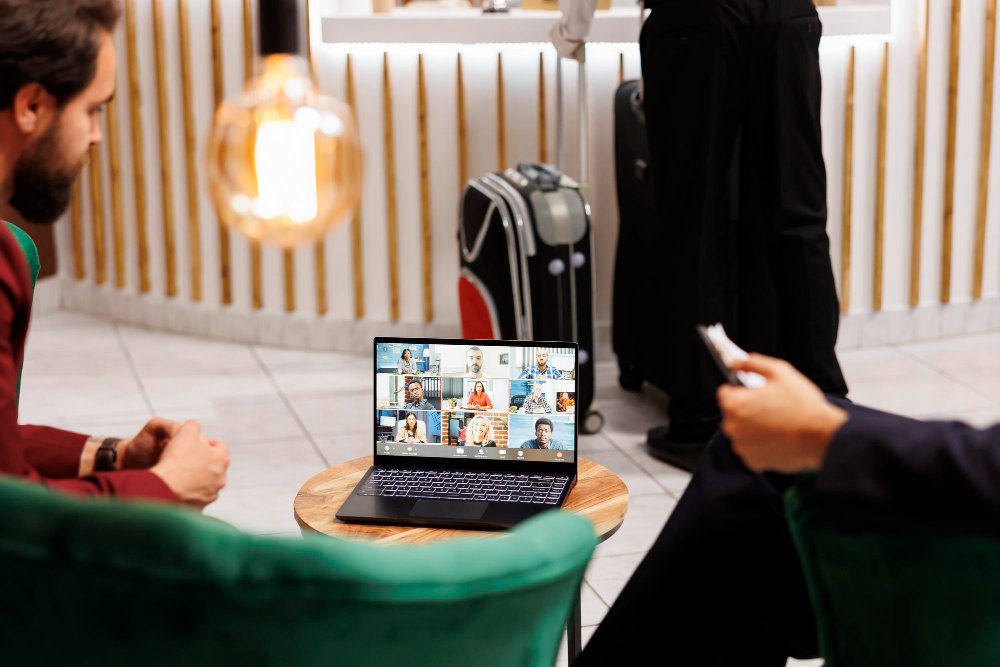
Audience lists have outgrown ballrooms. A company with staff in three cities, partners abroad, and clients who travel less than they once did cannot fit everyone who matters into one room.
That gap pushed the hybrid format from an emergency measure into a standing option. Energy Event now sees it requested for annual meetings, product launches, and the kind of corporate gathering that used to be strictly in-person.
The appeal is obvious, yet the execution is where most plans go wrong. A hybrid event is not a normal programme with a camera at the back — it serves two audiences whose needs pull in different directions, and the budget has to acknowledge that from the start.
Read also: When Should a Company Hire an Event Organizer Instead of Using an In-House Team?
What a Hybrid Event Actually Requires
Start with the crew. Running a hybrid event means operating a live broadcast alongside a live room, so the team needs a vision mixer, a stream operator, and a chat moderator with authority to interrupt the MC.
The venue list narrows too. Upload bandwidth becomes a hard requirement, and a wired connection separate from the guest wifi is worth insisting on. Many hotels quote lobby speeds, which says nothing about what the ballroom sustains.
Content needs a second pass as well. Slides that read comfortably from row twelve often fail on a laptop, and a panel recorded without individual microphones becomes an hour of muffled audio online.
Reaching a Wider Audience Without Diluting the Room
The strongest argument for the format is reach. Regional staff attend without flights, clients join only the session that concerns them, and the recording keeps working for months as training or marketing material.
Reach alone is not the point, though. The in-room audience still carries the networking and the energy that makes a corporate event worth leaving the office for, so their experience cannot be sacrificed to serve the camera.
Treat the two groups as separate deliverables. Decide early which sessions both audiences share, which belong only to the room, and which run online-only, then design each accordingly instead of streaming everything by default.
Read also: Room Psychology: Why Venue Layout Affects Attendee Mood
Production Standards the Remote Audience Judges
Remote attendees are less forgiving than guests in the room. Someone in a ballroom tolerates a dim slide; someone on a laptop closes the tab. The table below shows where the two audiences diverge most sharply.
| Element | In-room audience | Remote audience |
|---|---|---|
| Audio | Tolerates some echo | Leaves within minutes |
| Lighting | Reads the room naturally | Needs the speaker lit evenly |
| Slides | Reads from a distance | Needs larger type and fewer words |
| Q&A | Raises a hand | Needs a moderated channel |
| Breaks | Networks in the foyer | Needs filler content or a clear return time |
Audio deserves the largest share of attention, because remote viewers notice it first and forgive it least. Lighting comes next, since a speaker lit only by stage wash reads as a silhouette on camera.
Designing the Agenda for Two Audiences
Session length has to change. A keynote that holds a room for fifty minutes loses an online audience well before that, so a hybrid event usually runs shorter segments with more frequent breaks.
Interaction needs its own channel. Live polls, a moderated Q&A queue, and a named host who reads online questions aloud keep remote attendees participating.
Breaks require a plan as well. Rather than leaving a static slide on screen for twenty minutes, use the gap for short interviews, venue footage, or sponsor content, and always state the exact return time.
Read also: 5 Ways Event Lighting and Sound Affect Audience Comfort
When a Hybrid Event Makes Sense
The format suits events where information matters more than proximity: annual reports, product briefings, training, and conferences with speakers who cannot travel. It also suits programmes whose recording has a second life.
Some events gain nothing from it. Team building, gala dinners, and incentive trips depend on being there, and streaming them produces footage nobody watches while adding real cost.
Budget honestly before committing. A hybrid event typically adds twenty to forty per cent to production costs, so the reach it buys should be worth that figure rather than assumed free.
FAQ
Expect twenty to forty per cent above a comparable in-person programme, depending on camera count, streaming platform, and whether the recording needs editing.
Sometimes, although not every AV supplier handles live streaming. Ask about vision mixing, stream redundancy, and who monitors the broadcast feed during the programme.
Treating the online audience as an afterthought. Poor audio and an unmoderated chat lose remote attendees faster than anything else, and both are cheaper to fix in planning than on the day.